An emotional and what seems to me angry post from Michael Yon, who seems to be feeling heat from some general who wants him out of Iraq. Michael doesn't mince words, and has resorted to short fast dispatches to get the word out fast. Excerpt on his view of the army's attitude:
"For a military that is the first to gripe about not getting enough press–in a kind of war where the press can determine the outcome–it seems fairly obvious that the first step would be to at least make sure there is a place for the press to work. If this were a few months into this war, I could understand it, but to not even be at square one this far in? "
and:
"They want the press on a short leash, even at the expense of the life of a soldier."
enjoy, read the whole thing, here.
Saturday, March 24, 2007


Tuesday, March 13, 2007
Gore Vs. Reality
We're finding a little more skepticism now, or at least calls to calm down a bit to the right environmental Reverend Al Gore, some even saying that the shrill voice of calamity is muddying the waters and not helping matters.
Excerpt:
(The IPCC) estimated that the world’s seas in this century would rise a maximum of 23 inches — down from earlier estimates. Mr. Gore, citing no particular time frame, envisions rises of up to 20 feet and depicts parts of New York, Florida and other heavily populated areas as sinking beneath the waves, implying, at least visually, that inundation is imminent.
(emphasis and insert added)
Read the whole thing, here.
More, here.
and, here.
A scientific petition with 17,000 signatures against Gore's claim of disaster, here.
Excerpt:
(The IPCC) estimated that the world’s seas in this century would rise a maximum of 23 inches — down from earlier estimates. Mr. Gore, citing no particular time frame, envisions rises of up to 20 feet and depicts parts of New York, Florida and other heavily populated areas as sinking beneath the waves, implying, at least visually, that inundation is imminent.
(emphasis and insert added)
Read the whole thing, here.
More, here.
and, here.
A scientific petition with 17,000 signatures against Gore's claim of disaster, here.
We're being swindled
Update: Google video moved it, but you have to go through other sites to find it. See it here
Update: Google video has mysteriously disappeared. sorry. I don't know why.
I've been agreeing with the above statement for years, in regards to global warming. What I was reading in the news, and seeing on TV, and seeing on the internet did not add up. The more I looked, the worse it got. I watched this last night, and it answered a lot of questions. Funnily enough, it even said things I'd begun to observe, but I really don't think it has caught on yet, namely that Environmentalism is becoming a religion. Some people even compare Al Gore to Jesus Christ. I'm not even going to go there on the extreme issues with that one. If you can find a way to watch the documentary, watch it. It's very good. Even Patrick Moore, Co founder of GreenPeace, speaks out against it, saying that environmentalism has been flooded with extreme left pro Marxist anti capitalist poltitical activists who learned how to use green language to their advantage. When people like that talk, I start to listen.
Google video, here.
Update: Google video has mysteriously disappeared. sorry. I don't know why.
I've been agreeing with the above statement for years, in regards to global warming. What I was reading in the news, and seeing on TV, and seeing on the internet did not add up. The more I looked, the worse it got. I watched this last night, and it answered a lot of questions. Funnily enough, it even said things I'd begun to observe, but I really don't think it has caught on yet, namely that Environmentalism is becoming a religion. Some people even compare Al Gore to Jesus Christ. I'm not even going to go there on the extreme issues with that one. If you can find a way to watch the documentary, watch it. It's very good. Even Patrick Moore, Co founder of GreenPeace, speaks out against it, saying that environmentalism has been flooded with extreme left pro Marxist anti capitalist poltitical activists who learned how to use green language to their advantage. When people like that talk, I start to listen.
Google video, here.
Monday, February 05, 2007
Anyone else worried?
I've been worried for some time that the IPCC's latest report, due out soon, will cause a serious power frenzy by the higher ups. It's begun, and my sentiment is mirrored exactly here. We need to start uniting togther to stop the frenzy from getting further along. Any ideas on what we can do?
Monday, January 29, 2007
Watching out for the little guy
Just caught this floating around the blogsphere, and all I gotta say is, John Edwards really does look after numero uno. 28,000 square feet? Wow. And I'm living in a 650 Sq foot. 3 Bed Apartment. Of course, there's the rumours regarding a few shady tax breaks as well.
Warner Resolution Action
For anyone out there who is a bit annoyed (ie: incensed) at the extreme backbiting and partisanship that encompases the Warner Resolution, NZBear and Hugh Hewitt have a way of fighting back. I am posting an email they sent me of what we can do to help undermine the virtual sabotage of the "surge" of 20,000 US troops to Iraq. Here goes:
Please tell the candidates in the ’08 cycle especially – Alexander, Collins, Coleman and Smith and would be presidential nominees McCain and Brownback — that a vote for the Warner resolution is the end of support for them and the NRSC.
Senator Alexander’s phone: (202) 224-4944. His e-mail form is here: http://alexander.senate.gov/index.cfm?FuseAction=Contact.Home
Senator Brownback’s phone: (202) 224-6521. His e-mail form is here: http://brownback.senate.gov/CMEmailMe.cfm
Senator Coleman’s phone: (202) 224-5641.His e-mail form is here: http://coleman.senate.gov/index.cfm?FuseAction=Contact.ContactForm
Senator Collins’ phone: (202) 224-2523. Her e-mail form is here: http://collins.senate.gov/public/continue.cfm?FuseAction=ContactSenatorCollins.Email&CFID=39113496&CFTOKEN=99427497
Senator McCain's phone: (202) 224-2235. His campaign e-mail form is here: http://www.exploremccain.com/Contact/
Senator Smith’s phone: (202) 224-3753. His e-mail form is here: http://gsmith.senate.gov/public/index.cfm?FuseAction=Contact.Home
Senator Voinovich's phone: (202) 224-3353. His e-mail form is here: http://voinovich.senate.gov/contact/index.cfm
The GOP leadership, which need to announce that no resolution will voted on that encourages the enemy, and that includes the Warner resolution or any cousin of the Warner resolution:
Minority Leader Mitch McConnell’s phone is (202) 224-2541. His e-mail form is here: http://mcconnell.senate.gov/contact_form.cfm
Minority Whip Trent Lott’s phone is (202) 224-6253. His e-mail form is here: http://lott.senate.gov/index.cfm?FuseAction=Contact.Email
Senator Jon Kyl’s phone is (202) 224-4521. His e-mail form is here: http://kyl.senate.gov/contact.cfm
Senator John Ensign’s phone is (202) 224-6244. His e-mail form is here: http://ensign.senate.gov/forms/email_form.cfm
Write them, tell them what you think, and how that them turning their back on the Iraq war and our troops for a few votes is wrong.
Please tell the candidates in the ’08 cycle especially – Alexander, Collins, Coleman and Smith and would be presidential nominees McCain and Brownback — that a vote for the Warner resolution is the end of support for them and the NRSC.
Senator Alexander’s phone: (202) 224-4944. His e-mail form is here: http://alexander.senate.gov/index.cfm?FuseAction=Contact.Home
Senator Brownback’s phone: (202) 224-6521. His e-mail form is here: http://brownback.senate.gov/CMEmailMe.cfm
Senator Coleman’s phone: (202) 224-5641.His e-mail form is here: http://coleman.senate.gov/index.cfm?FuseAction=Contact.ContactForm
Senator Collins’ phone: (202) 224-2523. Her e-mail form is here: http://collins.senate.gov/public/continue.cfm?FuseAction=ContactSenatorCollins.Email&CFID=39113496&CFTOKEN=99427497
Senator McCain's phone: (202) 224-2235. His campaign e-mail form is here: http://www.exploremccain.com/Contact/
Senator Smith’s phone: (202) 224-3753. His e-mail form is here: http://gsmith.senate.gov/public/index.cfm?FuseAction=Contact.Home
Senator Voinovich's phone: (202) 224-3353. His e-mail form is here: http://voinovich.senate.gov/contact/index.cfm
The GOP leadership, which need to announce that no resolution will voted on that encourages the enemy, and that includes the Warner resolution or any cousin of the Warner resolution:
Minority Leader Mitch McConnell’s phone is (202) 224-2541. His e-mail form is here: http://mcconnell.senate.gov/contact_form.cfm
Minority Whip Trent Lott’s phone is (202) 224-6253. His e-mail form is here: http://lott.senate.gov/index.cfm?FuseAction=Contact.Email
Senator Jon Kyl’s phone is (202) 224-4521. His e-mail form is here: http://kyl.senate.gov/contact.cfm
Senator John Ensign’s phone is (202) 224-6244. His e-mail form is here: http://ensign.senate.gov/forms/email_form.cfm
Write them, tell them what you think, and how that them turning their back on the Iraq war and our troops for a few votes is wrong.
Sunday, January 28, 2007
I Love Cars
I often get criticized for my views on cars, driving, fuel prices, engine size, fuel mileage, but my views on it are far from based on ignorance. I've often seen trends, and views, and gone to see whether they were true or not. When I was in high school, I took auto shop, and we were asked to present a report on alternative fuel vehicles, and at the time, living in California, Electric cars were the big push by the media and "greenies". My report ended up being in favor of conventional cars, for many reasons, and if anyone asks, I will post them, but this post isn't the right time. I ran across this today, and it really illustrated the falsities of the "conventional" wisdom that gets bandied around the media.
I've always believed that America has a love affair with the car, and that is proven by the fact that there are vast amounts of improvements, upgrades and the like to customize your car practically indefinitly. Living in the UK, a supposed "green" country, with laws to try and "encourage" public transit and get people out of cars, driving is basically catching up to US levels, and customizing and modifications have caught on in a big way. Not like these, where the US essentially dominates, but what I like to call the "boy racer" scene, with many mods also being made to family cars, like the Ford Mondeo, with even a big site dedicated to the car.
This has shown that cars are still the preferred method of travel, and it doesn't take a brain surgeon to discover why. It's fast, cheap, easy, and direct to your door. With that in mind, why shouldn't we drive? The article I linked to shows the top 5 myths in regards to pollution and how we're destroying the world. I agree with pretty much every point, and it reflects my own observations in the world.
I especially liked the last point, in regards to what the real impact of driving less means. In the past 10 years I've seen environmentalism shift from a concern for the environment to how much power and influence can they wield. The driving less cars issue, with the resultant burning less fuel issue fails simply because it'd implausible. In myth 5 the author talks about how we would be better off dealing with the effects of global warming (which will most likely be far less severe than scientists have claimed).
This becomes a valid argument because:
A: Global warming will not stop or slow down because we burn less fuel.
B: Developing countries such as China and India would destroy their fragile economies, and that would not be good because historically it is countries with strong economies that have the most environmentally sound policies. In short, they can afford it.
C: If those economies did collapse, any environmental gain would be lost due to billions of people being totally unconcerned for the environment because they are worried about their very survival, though I am sure some people would enjoy that.
D :The solution to bring the world out of the crisis of global warming is to bring the countries who create the most pollution into a stable and positive economy that cares about the envrionment and has the spare cash to do so.
The result of artificially jacking up fuel prices through taxes, and raising the cost of using a car to horrifically high levels does nothing but increase the gap between rich and poor. The poor can't afford a car and are forced to use expensive, inefficient and dirty public transport, and the rich sit happy in their luxury cars burning fuel that they can afford to burn. The real squeeze ends up on the middle class, essentially forcing them to sacrifice other things to run increasingly expensive basic vehicles. And as has been seen in Britain, the amount of cars on the road is rising, not due to a disregard for the environment, but becasue the standard of living is rising and they can afford it. Which basically shows that when we can afford to pay for environmentalism, we are willing to do so.
Which begs the question, what's a better way to spend the funds raised as a result of the increased cost of awareness? Is it through spending in government with no oversight (through high fuel and road taxes) ? Or is it better to funnel the money through private companies who make use of environmental laws to create companies, jobs, and ultimately, a much cleaner and safer environment. I vote the latter.
I've always believed that America has a love affair with the car, and that is proven by the fact that there are vast amounts of improvements, upgrades and the like to customize your car practically indefinitly. Living in the UK, a supposed "green" country, with laws to try and "encourage" public transit and get people out of cars, driving is basically catching up to US levels, and customizing and modifications have caught on in a big way. Not like these, where the US essentially dominates, but what I like to call the "boy racer" scene, with many mods also being made to family cars, like the Ford Mondeo, with even a big site dedicated to the car.
This has shown that cars are still the preferred method of travel, and it doesn't take a brain surgeon to discover why. It's fast, cheap, easy, and direct to your door. With that in mind, why shouldn't we drive? The article I linked to shows the top 5 myths in regards to pollution and how we're destroying the world. I agree with pretty much every point, and it reflects my own observations in the world.
I especially liked the last point, in regards to what the real impact of driving less means. In the past 10 years I've seen environmentalism shift from a concern for the environment to how much power and influence can they wield. The driving less cars issue, with the resultant burning less fuel issue fails simply because it'd implausible. In myth 5 the author talks about how we would be better off dealing with the effects of global warming (which will most likely be far less severe than scientists have claimed).
This becomes a valid argument because:
A: Global warming will not stop or slow down because we burn less fuel.
B: Developing countries such as China and India would destroy their fragile economies, and that would not be good because historically it is countries with strong economies that have the most environmentally sound policies. In short, they can afford it.
C: If those economies did collapse, any environmental gain would be lost due to billions of people being totally unconcerned for the environment because they are worried about their very survival, though I am sure some people would enjoy that.
D :The solution to bring the world out of the crisis of global warming is to bring the countries who create the most pollution into a stable and positive economy that cares about the envrionment and has the spare cash to do so.
The result of artificially jacking up fuel prices through taxes, and raising the cost of using a car to horrifically high levels does nothing but increase the gap between rich and poor. The poor can't afford a car and are forced to use expensive, inefficient and dirty public transport, and the rich sit happy in their luxury cars burning fuel that they can afford to burn. The real squeeze ends up on the middle class, essentially forcing them to sacrifice other things to run increasingly expensive basic vehicles. And as has been seen in Britain, the amount of cars on the road is rising, not due to a disregard for the environment, but becasue the standard of living is rising and they can afford it. Which basically shows that when we can afford to pay for environmentalism, we are willing to do so.
Which begs the question, what's a better way to spend the funds raised as a result of the increased cost of awareness? Is it through spending in government with no oversight (through high fuel and road taxes) ? Or is it better to funnel the money through private companies who make use of environmental laws to create companies, jobs, and ultimately, a much cleaner and safer environment. I vote the latter.
Wednesday, January 17, 2007
Hot Air TV does Iraq
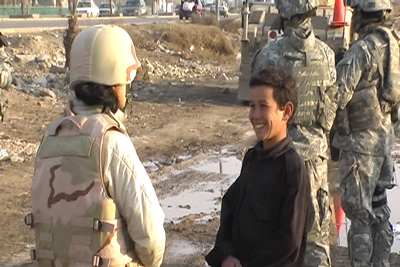
Absolute must watch webTV
As Glenn Reynolds said today: "Folks at CNN, et al., should be trembling."
Be sure to read Bryan Preston's written report as well: "So whether we win ugly or pretty, we have to win. And we can."
(Hope Hot Air doesn't mind me using one of their photos)
Tuesday, January 16, 2007
Welcome to Saigon! Er...Uh...I mean Ho Chi Minh City
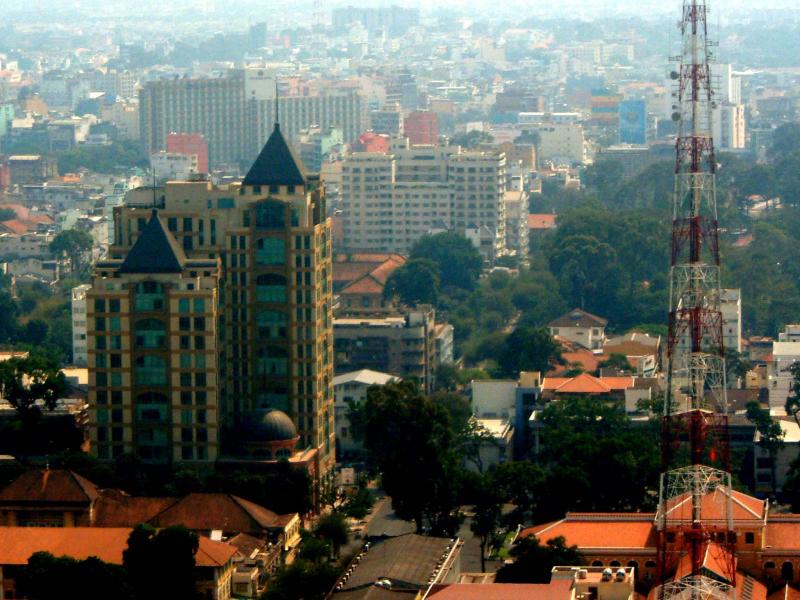
I was excited to go to Vietnam, a country I had always wanted to go to and see how things had changed since they opened up to the world and the U.S. normalized relations with them. I had heard mostly positive reports from business colleagues and some of my more adventurous travelling acquaintances, which only served to fuel my excitement in going. Unfortunately, my trip was all work and no play, with only half a day of free time. However, I was given an outline via e-mail of a great half day walking tour based on my hotel location from a friendly stranger which proved to be just perfect based on the amount of time I had.
Despite normalizing relations with Vietnam and their booming economy, there are no direct flight options to Vietnam, although most of the Asian air carriers have connecting flights to Ho Chi Minh City and Hanoi. I had already flown into Thailand so it was an easy 1 hour flight from Bangkok to Ho Chi Minh City - they are pretty close. I took Thai Airways from the brand new Suvarnabhumi International Airport in Bangkok and was told to get there early. Boy was I glad I did. The new airport in Bangkok is massive and that goes double for the check in area for Thai Airways. Not that its size helps much, the line to check into Thai Airways - for both Int'l and Domestic flights - ran out the door and down the sidewalk. Despite having rows of check-in counters available the staff simply couldn't check people in fast enough. Worse, there was no way of knowing which row of counters you had to go to for your flight until you managed to get through the door and into the terminal. After wasting an easy 30 minutes inching forward in this long line, I finally saw a sign that indicated check in for business class passengers (thankfully my company pays for business class tickets when travelling overseas). Once I got there it was smooth sailing and I was on my way to the gate.
However, once I got to the gate they announced that the flight was delayed (I apologize to my proud Thai friends but this is quite normal for Thai Airways, delays are too frequent and common). So despite arriving early and sweating in a long line I was destined to wait for Thai Airways to get their act together. Eventually, they herded us onto a bus on the tarmac where we drove around in what seemed like circles for 15 minutes before getting to our plane. (For your information, Thailand opened the new airport before it was 100% complete just to save face since it was already a couple of years late. Because of this, construction is still going on in various sections of the airport and not all the gates are available for the number of flights being handled by the airport). I settled down in my seat and closed my eyes and away we flew. It seemed we barely had time for a quick meal and a drink before we were landing in Ho Chi Minh City.
For those of the Vietnam War-generation, Saigon is the only name they know for Vietnam's largest, bustling city. Even the 3-letter airport code - SGN - has remained the same. But after the Vietnam War was ended, the government renamed it Ho Chi Minh City in honor of their beloved leader. For some people my parents age and who lived through that era it will always be known as Saigon and in fact many of the locals still refer to it this day as Saigon. However I found that many of the younger people did refer to it as Ho Chi Minh City, particularly when talking to a foreigner.
The airport is old and dated but it should be noted that Vietnam is making significant investments in transportation infrastructure and a new airport was hastily being constructed next to the old one. Althought the structure was quite dated and obviously unable to keep up with the number of flights and passengers being handled, everything was kept quite clean and orderly. While both the outside and inside looked as if they hadn't been changed much since the 70's, it was conspicuously clean and well organized. Long lines formed at immigration and when I got closer I could see why. Vietnam is one of the very few countries I have been to where the immigration control officers take their job seriously. These guys must have looked at my passport, their computer screen, my face, and back the passport again a dozen times over many long minutes before finally stamping my visa and passport and allowing me to go on my way. The baggage claim area was neat and orderly with uniformed government airport officers keeping close watch on everything. The AC was surprisingly in good order.
The official Vietnamese currency is the Dong and it's close to worthless. Up until a few years ago everyone openly accepted US Dollars in addition to Dong - in fact, even today, you can still find prices for some things in Dollars and not Dong. However, several years ago the government clamped down and mandated that goods and services must be tendered using the official Dong currency. The current value of the Dong is about 16,700 to the dollar, although it fluctuates widely and the rate you get from banks and hotels can vary from about 15,000-16,000 and is subject to change by the day. Because of this, Vietnamese use very few coins, with almost all transactions being done using paper money of large denominations. I had promised a friend of mine to pick up some Vietnamese coins and the only way I could do it was to beg a restaurant to give me a portion of my change in coins instead of paper.
I changed a small portion of money at the airport, figuring I could hit an ATM or bank later to exchange more. Besides, I was there on business and would be in meetings all day every day so there was little chance of me spending a lot of money.
Walking outside the heat was nigh unbearable. That sounds hard to believe coming from hot and humid Bangkok, but for those who know how hot Bangkok is believe me when I say that Ho Chi Minh City is even hotter! The humidity is worse than almost anywhere else I have been and the temperature several degrees hotter than Bangkok. I squinted my eyes in the bright sunlight outside as I looked for my agent who had come to pick me up. I noticed a bright smiling young man who looked as if he could have passed for 19-20 yrs old oustretching his hand and greeting me by name. His English name was James and it turns out he was indeed young, although more like 25-26 than 19-20. Again, like so many other Asian countries I had been to, it seems as if the young people are "in charge" just about everywhere. I met the other people from my agent's office who would be accompanying me the next few days and it turns out I was the oldest in the group at 33 yrs of age and the only one married! We quickly set off for our first factory visit and meeting in a mercifully cool SUV.
To be continued.........
Monday, January 15, 2007
Bali, Indonesia wrap-up
Meant to post this a very long time ago (I finished my trip to Bali way back in May 2006 - talk about procastinating!) but just got back from Costa Rica and before that spent a month in Vietnam and Thailand, so I have a lot of posts coming up about my recent travels. That and keeping up with my other work as well as taking care of my rapidly involving and active 11 month old has made it difficult to keep up with the blogging. So this post will be brief so I can begin my posts on Vietnam.
Bali is one of the most beautiful places I have ever been to. The Balinese people are cheerful and they have a very unique culture with their own strain of Hinduism. I think that's why the terrorist attacks were such a shock, it's hard to fathom such an attack taking place in such a relaxing and peaceful environment. The loss of confidence in security and the multiple travel warnings from Western governments have kept the flocks of tourists away and the Balinese economy has suffered greatly. Walking down the quiet and lonely streets of Kuta and Legian Village being physically accosted at every turn by desperate stores and street vendors is a sad experience, considering those areas used to be jam-packed with shoppers. Tourism is the number 1 industry in Bali and the terrorists nearly destroyed it.
That desperation has shown itself in the unbelievable admonitions of the locals who repeatedly insisted to me that there were "no more terrorists" and that Bali was "perfectly safe" with please to personally encourage my friends and relatives to come back to Bali. While the tourist trade has been slowly trickling upwards over the past year, it is still a fraction of what it used to be. Hotels and some major tourist areas have made significant investements in security, but should the terrorists decide to strike again I doubt it will make much difference, considering Indonesia's inability to properly prosecute and convict terrorists and the endemic corruption (particularly at the police and local government levels).
That's not to say I won't be back - I hope to go back one day to enjoy Bali again. Some people say it's not worth the risk, but I lived through 9/11 in NYC, which was far worst than the Bali terrorist attacks. The bottom line is that you are no longer safer ANYWHERE you go - terrorists have and can strike anywhere, America and Europe are no exception. That doesn't mean you should strap on a backpack and go hiking in the mountains of Taliban-controlled Waziristan or take a walking tour in Anbar Province in Iraq, but even so-called "safe" destinations are no longer safe. While I would be careful in Bali, I wouldn't avoid it - it has far too much to offer and its people deserve better than what they are dealing with now.
Bali is one of the most beautiful places I have ever been to. The Balinese people are cheerful and they have a very unique culture with their own strain of Hinduism. I think that's why the terrorist attacks were such a shock, it's hard to fathom such an attack taking place in such a relaxing and peaceful environment. The loss of confidence in security and the multiple travel warnings from Western governments have kept the flocks of tourists away and the Balinese economy has suffered greatly. Walking down the quiet and lonely streets of Kuta and Legian Village being physically accosted at every turn by desperate stores and street vendors is a sad experience, considering those areas used to be jam-packed with shoppers. Tourism is the number 1 industry in Bali and the terrorists nearly destroyed it.
That desperation has shown itself in the unbelievable admonitions of the locals who repeatedly insisted to me that there were "no more terrorists" and that Bali was "perfectly safe" with please to personally encourage my friends and relatives to come back to Bali. While the tourist trade has been slowly trickling upwards over the past year, it is still a fraction of what it used to be. Hotels and some major tourist areas have made significant investements in security, but should the terrorists decide to strike again I doubt it will make much difference, considering Indonesia's inability to properly prosecute and convict terrorists and the endemic corruption (particularly at the police and local government levels).
That's not to say I won't be back - I hope to go back one day to enjoy Bali again. Some people say it's not worth the risk, but I lived through 9/11 in NYC, which was far worst than the Bali terrorist attacks. The bottom line is that you are no longer safer ANYWHERE you go - terrorists have and can strike anywhere, America and Europe are no exception. That doesn't mean you should strap on a backpack and go hiking in the mountains of Taliban-controlled Waziristan or take a walking tour in Anbar Province in Iraq, but even so-called "safe" destinations are no longer safe. While I would be careful in Bali, I wouldn't avoid it - it has far too much to offer and its people deserve better than what they are dealing with now.
Wednesday, November 01, 2006
World's Shortest Political Quiz

According to the World's Shortest Political Quiz over at the libertarian site self-gov.org, I am a Right-Libertarian.
I have been taking the quiz on a yearly basis for some time now, answering as honestly as possible, to see how my political views may have changed over time. It's an interesting exercise just to see where I stand in a libertarian sense of the world. For the most part the results haven't yielded much difference, although I have noticed a slight movement to the right and downward in the Libertarian column.
Where do you stand? Take the quiz today.
Monday, October 30, 2006
Basing relationships on.....political views?
Ann Althouse links to an article in the NY Times about how politics has so fragmented society that some people can not think of maintaining a relationship with a person of opposing political views. She quotes from the NY Times:
Ann Althouse then comments:
I think deciding who you will be friends with or social to based on their political views is a pretty narrow-minded and bitter way to go through life. Happily, I have rarely encountered the types of individuals that Althouse is talking about and that are profiled in the Times article, but then again I don't exactly go out of my way to display my political views to the world. That's not to say I don't talk, and sometimes even argue, about politics with colleagues and friends, but whenever we do we keep it pretty civil. An often overlooked freedom we enjoy is the freedom to disagree, the freedom to form one's own opinion. Often my colleagues/friends and I will simply agree to disagree - we simply accept that the other person has their own opinions on the matter and aren't planning on changing them anytime soon, so just accept it and move on.
To give you an example my colleague at work and I have a pretty friendly relationship: we'll hook up for lunch sometimes, share similar movie tastes, and regularly stop by each other's cubicle to chit-chat about what's going on in each other's lives. We share photos of family and pets with each other and have generally gotten to know each other pretty well.
However, politically, we couldn't be more different. She once commented that Idaho could be a nice place to live if it wasn't so "religious". She thinks the world would be a better place if incomes were more equal and that the government should play a prominent role in equalizing those incomes. While she refrains from the Bush=Hitler/greatest-threat-to-world-peace theme so prevalent on the far-left, she thinks he's an idiot and still can't believe he became President - twice. And don't even start about Iraq or the war on terror. She's your basic, typical, California Bay Area Democrat. Now while I'm not a Republican (I'm a moderate/independent with some strong views on the war on terror - probably could be classified as a "Freeranger" based on Pajamas Media definition) most of my views venture pretty far to the right of hers, although I am not too fond of Bush myself (but I don't think he is an "idiot"). Yet we both get along just fine, content with our own political views and happy to find that we have some common interests outside of politics.
My next door neighbor is pretty much the same, in fact one time I saw him wearing the obligatory Che Guevera t-shirt , yet we get along just fine. We talk about the neighborhood and the city, chat about yard and garden maintenance and generally just get along great. Another acquaintance and I have argued somewhat strongly about politics from time to time, but at the end of the day we put it aside to talk about baseball, which is what brought us together in the first place.
Perhaps I just don't know enough "passionate" political people, or perhaps the really passionate types just avoid talking politics around me, I don't know.
Jim Coffman, 40, a Democrat in Chicago, said he and his wife have not pursued a friendship with another couple whose three children are the same ages as theirs after seeing photographs of President Bush on the other couple’s refrigerator. He said they have discussed with other friends “being so amazed that we could have so much in common, and yet be so diametrically opposed” when it comes to politics.
Ann Althouse then comments:
I think the greatest danger is that the people who are passionate about politics make a lot of other people not want to talk or even think about politics at all. Saying anything might make people not like you. That's enough to make most people avoid the subject... or to play the chameleon and seem to have whatever political opinions the other people have. Maybe you don't even know what you really think.
I think deciding who you will be friends with or social to based on their political views is a pretty narrow-minded and bitter way to go through life. Happily, I have rarely encountered the types of individuals that Althouse is talking about and that are profiled in the Times article, but then again I don't exactly go out of my way to display my political views to the world. That's not to say I don't talk, and sometimes even argue, about politics with colleagues and friends, but whenever we do we keep it pretty civil. An often overlooked freedom we enjoy is the freedom to disagree, the freedom to form one's own opinion. Often my colleagues/friends and I will simply agree to disagree - we simply accept that the other person has their own opinions on the matter and aren't planning on changing them anytime soon, so just accept it and move on.
To give you an example my colleague at work and I have a pretty friendly relationship: we'll hook up for lunch sometimes, share similar movie tastes, and regularly stop by each other's cubicle to chit-chat about what's going on in each other's lives. We share photos of family and pets with each other and have generally gotten to know each other pretty well.
However, politically, we couldn't be more different. She once commented that Idaho could be a nice place to live if it wasn't so "religious". She thinks the world would be a better place if incomes were more equal and that the government should play a prominent role in equalizing those incomes. While she refrains from the Bush=Hitler/greatest-threat-to-world-peace theme so prevalent on the far-left, she thinks he's an idiot and still can't believe he became President - twice. And don't even start about Iraq or the war on terror. She's your basic, typical, California Bay Area Democrat. Now while I'm not a Republican (I'm a moderate/independent with some strong views on the war on terror - probably could be classified as a "Freeranger" based on Pajamas Media definition) most of my views venture pretty far to the right of hers, although I am not too fond of Bush myself (but I don't think he is an "idiot"). Yet we both get along just fine, content with our own political views and happy to find that we have some common interests outside of politics.
My next door neighbor is pretty much the same, in fact one time I saw him wearing the obligatory Che Guevera t-shirt , yet we get along just fine. We talk about the neighborhood and the city, chat about yard and garden maintenance and generally just get along great. Another acquaintance and I have argued somewhat strongly about politics from time to time, but at the end of the day we put it aside to talk about baseball, which is what brought us together in the first place.
Perhaps I just don't know enough "passionate" political people, or perhaps the really passionate types just avoid talking politics around me, I don't know.
Saturday, October 28, 2006
San Francisco: Politics as usual....
I have always loved San Francisco. It's a beautiful, quirky city full of eclectic and interesting neighborhoods, amazing restaurants, funky foggy weather, and great shopping. There was a time when all I wanted to do was find a place to live in San Francisco and when my friend and I finally managed to squeeze our way into a multi-tenant house after searching for nearly 6 months I was overjoyed. But I only managed to live there for just under 2 years while going to school. Eventually it just got too expensive to live there - San Francisco is an incredibly expensive place to live, even if you are a fresh college grad with a steady job.
One of the interesting things about San Francisco that I remember very well are elections. The ballots were always a mess of wacky propositions, more than a few that made no sense at all. Sometimes reading them was an excercise in humor, and other times I just shook my head in disbelief.
This year's election is no different: according to the Chronicle, 6 of the 11 measures were placed on the ballot the last possible day, 4 within the last 5 minutes of closing time at the registrar of voters office:
Proposition C - Raising the salaries of certain city employees (such as Mayor, City Attorney, Sheriff, etc.) based on the average salary paid to comparable officials in other Bay Area counties. Boo hoo. Other counties pay their officials more - we're jealous.
Proposition D - Measure to prohibit city and city contractor's from disclosing individuals private information.
Proposition E - To raise the parking tax from 25% to 35%. I'll quote the Chronicle from the same article linked above:
Hey, come on now, those raises for city officials have to come from somewhere!
Proposition F - Sick Leave Ordinance - will require all employers to provide sick leave to their employees working in San Francisco. Again I quote the Chronicle:
Proposition G - This one's my favorite. It's a classic liberal elitist rejection of the free market economy: banning retail chain stores. (No! No! That's not true, we will simply require them to get special permission from the planning board before operating in a neighborhood that already has a retail chain store!) Don't worry. Most people vote with their pocketbooks and feet anyways, this will just drive more San Francisco shoppers to leave the city to get their Starbuck mocha lattes and shop at Target or WalMart; better yet, by being outside of the city, they can avoid that shameful embarassment of being seen by their friends as supporting the evil global corporate conspiracy!
Proposition H - Another classic. Requiring landlords to actually pay to relocate their tenants who are evicted "through no fault of their own". One of the reasons San Francisco is so freakin' expensive is because of all the ridiculous rent control laws. I have a question: how can someone be evicted through no fault of their own? You mean it's not their fault when they forget to repeatedly pay the rent? It's no fault of their own when they violate the rent agreement they signed? Oh, right, this is for those landlords that just kick people out to the street for no reason - and we all know how evil landlords are!
Proposition I - Where's the love? We miss our mayor. So we'll propose some bonehead measure that will require him to visit with us at least once a month. Why won't he love us??
Proposition J - My second favorite: a useless measure calling for the impeachment of President Bush and Vice President Cheney. Yeah, San Francisco will get far with that one folks.
Proposition K - Adopting a policy that acknowledges the housing needs of seniors and disabled persons. No action, no plan, let's just acknowledge the problem. Come on, we need your vote otherwise we can't acknowledge there is a problem.
And some people wonder why San Francisco's population has fallen nearly 5% in the past 5 years, why families are leaving for cheaper cities and suburbs with better schools, and job creation is greatest outside of the city, not in it.
One of the interesting things about San Francisco that I remember very well are elections. The ballots were always a mess of wacky propositions, more than a few that made no sense at all. Sometimes reading them was an excercise in humor, and other times I just shook my head in disbelief.
This year's election is no different: according to the Chronicle, 6 of the 11 measures were placed on the ballot the last possible day, 4 within the last 5 minutes of closing time at the registrar of voters office:
Of the 11 measures, six were slapped on it the last possible day by a minority of city supervisors.No hearings, no economic analysis, no public notice. Four of the measures arrived less than five minutes before closing time at the registrar of voters office on deadline day.
Each proposition deserves a serious look by voters. But when a measure drops unannounced on the ballot, it should make a voter think: How thoroughly was this idea vetted?
How thoroughly indeed? As the article explains, in San Francisco only 4 out of the 11 supervisors are required in order to place a measure on the ballot. Here's what the voters of San Francisco get to vote on in this election:
Proposition A - $450,000,000 in bonds to to modernize and repair up to 64 additional school facilities. (Is this even necessary in a city where the number of households classified as families with children under 18 is only 16.6% and shrinking?)
Proposition B - A parental leave policy for Board of Supervisor members due to pregnancy, child birth, or a "related condition" that would allow them to participate in meetings by teleconference.Proposition C - Raising the salaries of certain city employees (such as Mayor, City Attorney, Sheriff, etc.) based on the average salary paid to comparable officials in other Bay Area counties. Boo hoo. Other counties pay their officials more - we're jealous.
Proposition D - Measure to prohibit city and city contractor's from disclosing individuals private information.
Proposition E - To raise the parking tax from 25% to 35%. I'll quote the Chronicle from the same article linked above:
The city's 25 percent tax on parking rates is among the highest in the nation. This measure would push it to 35 percent but where will the money go? Backers say the new money will support transit, but that's not guaranteed. This measure was put on the ballot by four supervisors with no hearings. Vote NO.
Hey, come on now, those raises for city officials have to come from somewhere!
Proposition F - Sick Leave Ordinance - will require all employers to provide sick leave to their employees working in San Francisco. Again I quote the Chronicle:
This one's a stunner: required sick pay for all workers in the city. Were there hearings, negotiations, an assessment of the economic impact and a consensus buy-in like the city had when it approved universal health coverage this year? No.
-------------------------------------------------------------
This measure -- handed in at 4:58 p.m. on the last day possible -- could put the city at the forefront on an important issue. Or it could be an inflexible plan that spells failure.
Proposition G - This one's my favorite. It's a classic liberal elitist rejection of the free market economy: banning retail chain stores. (No! No! That's not true, we will simply require them to get special permission from the planning board before operating in a neighborhood that already has a retail chain store!) Don't worry. Most people vote with their pocketbooks and feet anyways, this will just drive more San Francisco shoppers to leave the city to get their Starbuck mocha lattes and shop at Target or WalMart; better yet, by being outside of the city, they can avoid that shameful embarassment of being seen by their friends as supporting the evil global corporate conspiracy!
Proposition H - Another classic. Requiring landlords to actually pay to relocate their tenants who are evicted "through no fault of their own". One of the reasons San Francisco is so freakin' expensive is because of all the ridiculous rent control laws. I have a question: how can someone be evicted through no fault of their own? You mean it's not their fault when they forget to repeatedly pay the rent? It's no fault of their own when they violate the rent agreement they signed? Oh, right, this is for those landlords that just kick people out to the street for no reason - and we all know how evil landlords are!
Proposition I - Where's the love? We miss our mayor. So we'll propose some bonehead measure that will require him to visit with us at least once a month. Why won't he love us??
Proposition J - My second favorite: a useless measure calling for the impeachment of President Bush and Vice President Cheney. Yeah, San Francisco will get far with that one folks.
Proposition K - Adopting a policy that acknowledges the housing needs of seniors and disabled persons. No action, no plan, let's just acknowledge the problem. Come on, we need your vote otherwise we can't acknowledge there is a problem.
And some people wonder why San Francisco's population has fallen nearly 5% in the past 5 years, why families are leaving for cheaper cities and suburbs with better schools, and job creation is greatest outside of the city, not in it.
Friday, October 27, 2006
Hot Air Interviews Mark Steyn
Part I here, get Part II here.
Absolute must watch internet TV. Also check out Mark Steyn's new book "America Alone: The End of the World as We Know It." Here is an excerpt from Austin Bay's review at Strategy Page:
Absolute must watch internet TV. Also check out Mark Steyn's new book "America Alone: The End of the World as We Know It." Here is an excerpt from Austin Bay's review at Strategy Page:
Steyn is an arch "Euro-pessimist," who backs his pessimism with numbers.
Europeans are reproducing below the "replacement rate" -- thus the average age of their populations is increasing sharply. If current trends continue, by 2050 one in three Germans and Italians will be over 65 years old. In the United States, only one in five will be so gray.
As a result, the Europe of the European Union (Steyn disdainfully calls it "Eutopia") faces economic decline and risks systemic change. Steyn writes: "Tax revenues that support the ever growing numbers of the elderly and retired have to be paid by equally growing numbers of the young and working. The design flaw of the radically secularist Eutopia is that it depend on a religious-society birth rate."
Japan faces the same "gray threat." Even China has a birthrate below the demographic replacement rate. Among the modern industrial nations, only the United States (and possibly India) has the knack for reproduction.
The United States also grows through immigration that includes political and cultural integration.
Europe's Muslims, however, are multiplying -- but they are not integrating culturally. Steyn argues that if European nations fail to culturally integrate Muslims, Europe faces profound political changes.
"As fertility dries up," he writes, "so do societies. Demography is the most obvious symptom of civilizational exhaustion, and the clearest indicator of where we're headed."
The rise of home-grown Muslim extremism in Australia
A couple of days ago we linked to a story about Australia's most senior Mulsim cleric, Sheikh Taj Din al-Hilali, blaming women for sexual attacks and likening them to meat. Today the Counterterrorism Blog has a detailed post profiling the rise of home-grown Mulsim extremism in Australia, where at least one Australian-born Muslim cleric has called for Australian Muslims to fight against coalition forces (which include their own Australian troops) in Afghanistan and Iraq:
They also provide this tidbit of information on Al-Hilali, the cleric who likened women to meat:
While the radicals comprise only a small number of Australia’s 300,000 Muslims (who come from some 20 countries), their vociferous and intolerant discourse is disturbing. It also adds increasing light to the problem of home-grown Islamist militancy in Australia.
Last year, the firebrand imam, Abdul Nacer Benbrika, originally from Algeria but who eventually became an Australian citizen, went on national television and stated unequivocally that he could not tolerate any religion but Islam: "According to my religion, here, I don't accept all other religion except the religion of Islam… I am telling you that my religion doesn't tolerate other religion. It doesn't tolerate. The only one law which needs to spread, it can be here or anywhere else, has to be Islam."
Benbrika, who described Osama bin Laden as “great man,” also caused a stir by inciting Australian Muslims to go to Iraq and fight coalition – including Australian – troops; stating that it was a religious obligation for Muslims to do so.
Benbrika was arrested last November for being the ringleader of a terrorist plot. According to police officials from the State of Victoria, though the plot was in its "developmental stages,” Benbrika and his followers (two cells, one in Sydney, the other in Melbourne), were clearly inspired by the terrorist attacks in Madrid and London and were planning a major attack. In a telephone conversation intercepted by the police, Abdulla Merhi, said he "could wait months but not years" to carry out jihad. "You shouldn't kill just one, two or three," Mr Benbrika allegedly responded. "Do a big thing." "Like Madrid?" Mr Merhi allegedly inquired, to which Mr Benbrika was said to have replied: "That's it." He continued, "If you kill, we kill here 1000, because if you get large numbers here, the government will listen." Members of the Melbourne cell were allegedly filming the Australian Stock Exchange and Flinders Street Station, the main commuter rail terminus in Melbourne.
They also provide this tidbit of information on Al-Hilali, the cleric who likened women to meat:
Al-Hilali has been in the news before. He was nearly deported several times before gaining citizenship owing to his radical preaching and tirades. He called the 9/11 attacks "God's work against oppressors" and continues to astound people with his virulent anti-Semitism and Holocaust denial. These statements got him expelled from the Prime Minister's Muslim Advisory Board.
Public school systems say charter schools unfair
Because, dammit, charter schools are able to use their entire budget to focus entirely on their schools and provide the education that their community demands:
Via Cato-at-Liberty, who comments:
"I think it's basically unfair to compare an entity that is able to take their entire budget and focus it entirely on their own schools," he said. "They have some real advantages over our schools in the flexibility of actually providing the type of education that a particular community wants, whereas we are trying to provide a curriculum that works for everyone all across the school district."
Via Cato-at-Liberty, who comments:
Yeah! Lauritzen is right! I mean, the nerve of people creating schools that can provide what parents and communities want!
It’s no wonder that, a few months ago, Mr. Lauritzen proposed a moratorium on charter schools, and that public schooling’s defenders fight even harder against reforms like vouchers and tax credits. After all, who could just sit by and watch parents get schools they want when an old, hopeless system is suffering?
Thursday, October 26, 2006
Post-Trip Report: Observations on India
While the majority of my postings were basically just day-journals describing where I went and who I met, etc. I wanted to do a post-trip report detailing some of the things that I learned or discovered and thought were interesting, at least to me.
India:
India's greatest export is human talent and they know it. Everyday I read the newspaper and managed to read the occasional local English language news magazine. They were chock-full of advertisements for private universities, colleges, and technical schools offering degrees in Medicine, Engineering, Computer Programming and Science, Advanced Chemistry, Physics, or Biology, Nursing, etc. The advertisements openly stated that their goal and purpose was to prepare their students for overseas positions in the U.S., Europe, and other developed nations, some even made dubious claims that guaranteed their students placement with a multinational firm. Despite India's "developing" status it is still an incredibly poor country with huge income disparity, massive poverty, barely functioning infrastrucure, mass pollution, and a rocky democracy. Anyone with enough education or money to immigrate has done so or is trying to do so. The few wealthy I met who were content to stay were those that owned factories and business and often had government or influential family connections. They lived in considerable luxury, driving Mercedes and BMWs, servants to take care of their every need, and took vacations all over the world, so they had little desire or need to move anywhere else. From what little I could gather, it was the middle class or somewhat upper middle class that was yearning for a new home elsewhere.
My agent had tried unsuccessfully to immigrate to the U.S., Germany, and France. He still had aspirations to move his family to another country, despite being fairly well off with what would be considered a very good job in India. A short time before I arrived he had gone to a farewell party for one of his close friends who had finally managed to find a way to immigrate to, if I remember correctly, Australia - after numerous attempts to European countries and the U.S. over a very long multi-year period. He had another friend who had spent a small fortune obtaining an engineering degree and several years of experience in a big Indian firm just so he would be considered for engineering positions overseas. After many months of searching, he finally got picked up by a firm in California willing to sponsor him for a work visa.
Bottom line, Indians are very well aware that the industrialized western world is short of skilled scientists, doctors, and technical workers such as engineers. There is a huge market for educating and developing skilled workers to supply developed countries and there is plenty of interest from the public.
The difference in our education emphasis was profound. Talk to most Indian parents and they will tell you their children are studying science, math, technology, finance, etc. Same goes for the students, who invariably end up studying whatever their parents want them to. While there are liberal arts colleges and classes, it seemed to me they were in the minority. When I told them that in the U.S. our students, for the most part, studied what they wanted to despite their parents' expectations, they were horrified that a child would even consider not fulfilling their parents' wishes. Keep in mind that this is a culture where some marriages are still arranged.
As can be imagined, many Indians are vegetarians, but what may be surprising to some is the militancy to which some Indians take it. For example, in Delhi some landowners refuse to rent to non-vegetarians. They will ask potential tenants if they eat meat or not - if the answer is meat, then they refuse to rent to them. This is obviously discriminatory and would never fly in the U.S., probably they even have an anti-discrimination law, but nobody follows it. In fact, that is a common feature of third world and developing countries: a lack of respect for the law and little enforcement of it. Many people just ignore the laws in place because they know there is little to no consequence for not following the law.
Another example of this is the concept of multiple wives, which from my understanding is forbidden by largely ignored laws. It is seen as a sign of affluency to have more than one wife. Of course, you can only be legally married to one wife, but often men will take a second or third "wife", just not legally marry them. Sometimes they all live happily together, sometimes the men will have several homes with a wife in each. Most of the time the first wives were fully aware of the situation and some were quoted as saying they had no problem with it - as long as their husbands took care of the family and the finances, then they were fine. However, I did read one story where they finally busted a guy after one of his newer wives complained - seemed he travelled a lot and was in the habit of marrying a girl in just about every province he visited. He even had homes and kids with these "wives" and somehow managed to keep it all in order without any of this wives realizing he had other families. He even used false identities in some cases to secure marriages. Eventually he was found out and they sorted through the guy's messy life. In most cases the men simply ignored or flaunted the law.
While many in the cities are well educated and live modern lifestyles, one only has to travel a short way outside the city limits to find dirt poor Indians living in the stone age. What middle class exists is thin, with most of society divided between urban and poor - you either live in a city in the modern world or eek out an existence in the rural country. As I stated in one of my India posts, it was not uncommon to see a shining gigantic mall and right across the street are farmers living in tin huts raising chickens and scratching out a living in the dirt. Often both sides were living smack dab next to each other.
The communist party has always enjoyed a fairly strong presence in Indian politics and from what I read it seemed they had taken good advantage of these "class" differences to bolster their numbers. I was alarmed to find that in one province the communists had won a large majority and was considered a major victory. Photos showed huge crowds of supporters in red shirts. My colleague could see I was surprised and told me not to worry, that the communists were a minority and not so bad. Yet one of the party organizers had named himself Stalin - legally changed his name to Stalin! - and it is an open secret that there is a growing Maoist insurgency wreaking havoc in different parts of India.
All the Indians I met were incredibly friendly, gracious, and polite. While certainly part of that is due to being on a business trip where I was the client, Indians are simply gracious hosts and value hospitality. They are also very proud of their history and culture, it only takes a few prodding questions about this or that landmark or building and they will eagerly provide you with a detailed history about it. Everywhere I went my Indian colleagues were eager to find out if I liked the food or pushed me to try something different. They went out of their way to ask if I was happy with the hotels or had any problems and seemed especially pleased when I complimented them about their offices or operations.
While we mostly avoided politics, the Indians I met seemed to genuinely like America and Americans, although many also expressed disappointment in our alliance with Pakistan, their old enemy. India has long been a victim of terrorism from a myriad group of enemies, long before the U.S., and those I spoke to expressed their strong opposition to any and all terrorist attacks and sympathized greatly with the U.S. during and after 9/11. Those I spoke to were avid supporters of the war on terrorism; some thought we weren't doing enough to kill terrorists and wondered why we showed so much restraint, and one gentleman even suggested we changed the wrong regime - he said we should have taken over Pakistan instead of Iraq.
While I thoroughly enjoyed all the wonderful people I met and found Indians to be incredibly friendly and gracious wherever I went, I can't say that it is a country I am looking forward to visiting again soon. I loved the food and have definitely made at least one good friend, but the entire country is basically broken - nothing really works. Sure, they have beautiful 5 star hotels with every amenity and modern air conditioned tour buses and cars that will take you to every major attraction you wish to see, but step outside that false comfort zone and you will find that all is not as it seems to be. Infrastructure is old and dated and unable to keep up with the pace of growth. If it weren't for the numerous generators installed at hotels and factories and major office buildings the electricity would be going out intermittently throughout the day. Litter was everywhere and in some cases piles of trash were found in the middle of fields or just on the side of the street. The pollution is almost unbearable and traffic is insane. Of course, it didn't help that I got horribly sick while I was there, that will put a damper on anyone's trip, but even when healthy I just saw a country trying to catch up with the industrialized world. Surely, they are making progress, and with such intelligent and hard working people I believe they will get there and become an economic powerhouse in the years to come. But that day is years away.
Next: Bali post-trip comments.
India:
India's greatest export is human talent and they know it. Everyday I read the newspaper and managed to read the occasional local English language news magazine. They were chock-full of advertisements for private universities, colleges, and technical schools offering degrees in Medicine, Engineering, Computer Programming and Science, Advanced Chemistry, Physics, or Biology, Nursing, etc. The advertisements openly stated that their goal and purpose was to prepare their students for overseas positions in the U.S., Europe, and other developed nations, some even made dubious claims that guaranteed their students placement with a multinational firm. Despite India's "developing" status it is still an incredibly poor country with huge income disparity, massive poverty, barely functioning infrastrucure, mass pollution, and a rocky democracy. Anyone with enough education or money to immigrate has done so or is trying to do so. The few wealthy I met who were content to stay were those that owned factories and business and often had government or influential family connections. They lived in considerable luxury, driving Mercedes and BMWs, servants to take care of their every need, and took vacations all over the world, so they had little desire or need to move anywhere else. From what little I could gather, it was the middle class or somewhat upper middle class that was yearning for a new home elsewhere.
My agent had tried unsuccessfully to immigrate to the U.S., Germany, and France. He still had aspirations to move his family to another country, despite being fairly well off with what would be considered a very good job in India. A short time before I arrived he had gone to a farewell party for one of his close friends who had finally managed to find a way to immigrate to, if I remember correctly, Australia - after numerous attempts to European countries and the U.S. over a very long multi-year period. He had another friend who had spent a small fortune obtaining an engineering degree and several years of experience in a big Indian firm just so he would be considered for engineering positions overseas. After many months of searching, he finally got picked up by a firm in California willing to sponsor him for a work visa.
Bottom line, Indians are very well aware that the industrialized western world is short of skilled scientists, doctors, and technical workers such as engineers. There is a huge market for educating and developing skilled workers to supply developed countries and there is plenty of interest from the public.
The difference in our education emphasis was profound. Talk to most Indian parents and they will tell you their children are studying science, math, technology, finance, etc. Same goes for the students, who invariably end up studying whatever their parents want them to. While there are liberal arts colleges and classes, it seemed to me they were in the minority. When I told them that in the U.S. our students, for the most part, studied what they wanted to despite their parents' expectations, they were horrified that a child would even consider not fulfilling their parents' wishes. Keep in mind that this is a culture where some marriages are still arranged.
As can be imagined, many Indians are vegetarians, but what may be surprising to some is the militancy to which some Indians take it. For example, in Delhi some landowners refuse to rent to non-vegetarians. They will ask potential tenants if they eat meat or not - if the answer is meat, then they refuse to rent to them. This is obviously discriminatory and would never fly in the U.S., probably they even have an anti-discrimination law, but nobody follows it. In fact, that is a common feature of third world and developing countries: a lack of respect for the law and little enforcement of it. Many people just ignore the laws in place because they know there is little to no consequence for not following the law.
Another example of this is the concept of multiple wives, which from my understanding is forbidden by largely ignored laws. It is seen as a sign of affluency to have more than one wife. Of course, you can only be legally married to one wife, but often men will take a second or third "wife", just not legally marry them. Sometimes they all live happily together, sometimes the men will have several homes with a wife in each. Most of the time the first wives were fully aware of the situation and some were quoted as saying they had no problem with it - as long as their husbands took care of the family and the finances, then they were fine. However, I did read one story where they finally busted a guy after one of his newer wives complained - seemed he travelled a lot and was in the habit of marrying a girl in just about every province he visited. He even had homes and kids with these "wives" and somehow managed to keep it all in order without any of this wives realizing he had other families. He even used false identities in some cases to secure marriages. Eventually he was found out and they sorted through the guy's messy life. In most cases the men simply ignored or flaunted the law.
While many in the cities are well educated and live modern lifestyles, one only has to travel a short way outside the city limits to find dirt poor Indians living in the stone age. What middle class exists is thin, with most of society divided between urban and poor - you either live in a city in the modern world or eek out an existence in the rural country. As I stated in one of my India posts, it was not uncommon to see a shining gigantic mall and right across the street are farmers living in tin huts raising chickens and scratching out a living in the dirt. Often both sides were living smack dab next to each other.
The communist party has always enjoyed a fairly strong presence in Indian politics and from what I read it seemed they had taken good advantage of these "class" differences to bolster their numbers. I was alarmed to find that in one province the communists had won a large majority and was considered a major victory. Photos showed huge crowds of supporters in red shirts. My colleague could see I was surprised and told me not to worry, that the communists were a minority and not so bad. Yet one of the party organizers had named himself Stalin - legally changed his name to Stalin! - and it is an open secret that there is a growing Maoist insurgency wreaking havoc in different parts of India.
All the Indians I met were incredibly friendly, gracious, and polite. While certainly part of that is due to being on a business trip where I was the client, Indians are simply gracious hosts and value hospitality. They are also very proud of their history and culture, it only takes a few prodding questions about this or that landmark or building and they will eagerly provide you with a detailed history about it. Everywhere I went my Indian colleagues were eager to find out if I liked the food or pushed me to try something different. They went out of their way to ask if I was happy with the hotels or had any problems and seemed especially pleased when I complimented them about their offices or operations.
While we mostly avoided politics, the Indians I met seemed to genuinely like America and Americans, although many also expressed disappointment in our alliance with Pakistan, their old enemy. India has long been a victim of terrorism from a myriad group of enemies, long before the U.S., and those I spoke to expressed their strong opposition to any and all terrorist attacks and sympathized greatly with the U.S. during and after 9/11. Those I spoke to were avid supporters of the war on terrorism; some thought we weren't doing enough to kill terrorists and wondered why we showed so much restraint, and one gentleman even suggested we changed the wrong regime - he said we should have taken over Pakistan instead of Iraq.
While I thoroughly enjoyed all the wonderful people I met and found Indians to be incredibly friendly and gracious wherever I went, I can't say that it is a country I am looking forward to visiting again soon. I loved the food and have definitely made at least one good friend, but the entire country is basically broken - nothing really works. Sure, they have beautiful 5 star hotels with every amenity and modern air conditioned tour buses and cars that will take you to every major attraction you wish to see, but step outside that false comfort zone and you will find that all is not as it seems to be. Infrastructure is old and dated and unable to keep up with the pace of growth. If it weren't for the numerous generators installed at hotels and factories and major office buildings the electricity would be going out intermittently throughout the day. Litter was everywhere and in some cases piles of trash were found in the middle of fields or just on the side of the street. The pollution is almost unbearable and traffic is insane. Of course, it didn't help that I got horribly sick while I was there, that will put a damper on anyone's trip, but even when healthy I just saw a country trying to catch up with the industrialized world. Surely, they are making progress, and with such intelligent and hard working people I believe they will get there and become an economic powerhouse in the years to come. But that day is years away.
Next: Bali post-trip comments.
Wednesday, October 25, 2006
Australia's senior Muslim cleric: Women are to blame for sex attacks
Apparently, any woman who dresses immodestly (in his eyes) is simply "...uncovered meat..."
Big hat tip to Hot Air.In the religious address on adultery to about 500 worshippers in Sydney last month, Sheik Hilali said: "If you take out uncovered meat and place it outside on the street, or in the garden or in the park, or in the backyard without a cover, and the cats come and eat it ... whose fault is it, the cats or the uncovered meat?
"The uncovered meat is the problem."
The sheik then said: "If she was in her room, in her home, in her hijab, no problem would have occurred."
He said women were "weapons" used by "Satan" to control men.
"It is said in the state of zina (adultery), the responsibility falls 90 per cent of the time on the woman. Why? Because she possesses the weapon of enticement (igraa)."
It should be noted that many Muslim community leaders were outraged by the remarks:
Muslim community leaders were yesterday outraged and offended by Sheik Hilali's remarks, insisting the cleric was no longer worthy of his title as Australia's mufti.
Young Muslim adviser Iktimal Hage-Ali - who does not wear a hijab - said the Islamic headdress was not a "tool" worn to prevent rape and sexual harassment. "It's a symbol that readily identifies you as being Muslim, but just because you don't wear the headscarf doesn't mean that you're considered fresh meat for sale," the former member of John Howard's Muslim advisory board told The Australian. "The onus should not be on the female to not attract attention, it should be on males to learn how to control themselves."
Australia's most prominent female Muslim leader, Aziza Abdel-Halim, said the hijab did not "detract or add to a person's moral standards", while Islamic Council of Victoria spokesman Waleed Ali said it was "ignorant and naive" for anyone to believe that a hijab could stop sexual assault.
"Anyone who is foolish enough to believe that there is a relationship between rape or unwelcome sexual interference and the failure to wear a hijab, clearly has no understanding of the nature of sexual crime," he said.
Ms Hage-Ali said she was "disgusted and offended" by Shiek Hilali's comments. "I find it very offensive that a man who considers himself as a mufti, a leader of Australia's Muslims, can give comment that lacks intelligence and common sense."
Monday, October 23, 2006
Eager to go home
This day was my last day with our agent and transportation rep, neither of which was local, both having travelled away from their families and homes on Java. Even though Bali is also a major vacation destination for local Indonesians from Java and other islands and provinces, being away from their families was taking its toll and I could tell they were itching to get this day done and head home.
Once again we headed up to Tampaksiring and by this time I was recognizing the roads and landmarks as we travelled into the hills. We visited a new supplier for my company who, like so many others in Bali, had simply located their "factory" in a residential area behind their house. They had about 20 workers busily carving and finishing different types of handicrafts in a large building constructed behind the main house. A small driveway connected their "Cargo loading area" to the main street outside. The owners were very young and had only started the business a couple of years prior. They were very proud of their accomplishments, although they seemed somewhat uneasy at their long term prospects, having only secured a handful of major accounts.
We then moved on to another factory located in yet another area we had been to before. This one consisted of several buildings thrown up amongst fields of rice paddies. They were substantially larger with a somewhat more traditional factory operation in the western sense, although I was confused as to why they had located in the middle of nowhere, I guess it was really cheap. The owners were interesting. They were a married couple, the husband a local Balinese and strict Hindu, and his wife a former Muslim from Java. I was a bit surprised as most of the married people I had met were either both Hindu or Muslim or Christian, never a mix of the two. The man's wife had since converted to Balinese Hinduism after marriage, mostly because her family and friends had denounced her decision to marry someone outside of the faith, declaring her "unfit" for Muslim membership. She explained that the decision to marry her husband was one of the toughest decisions of her life. A devout Muslim her entire life, it was expected that she would simply marry a fellow Muslim man, most likely arranged by her parents. She kept her relationship with her Hindu husband secret for awhile out of concern for her parents reaction. When she announced she wanted to get married to him, her family was very angry, with her parents threatening to disown her and receiving threats of bodily harm from so-called friends and relatives. She decided to stick with her decision and her parents basically cut off communication and refused to attend her wedding. She still maintained limited contact with some of her relatives, but the relationships were strained. While she had converted to Hinduism she explained that she still could not bring herself to eat pork, while her husband could not eat beef (Muslims don't eat pork because it is considered an unclean animal while Hindus don't eat beef because they consider cows to be sacred animals). She laughed, saying this made for some interesting dinner combinations, particularly when they went to her in-laws for dinner. Despite her family troubles, she seemed very happy and content with her new life in Bali. She took us out for lunch to a restaurant set amongst fields of rice paddies. It was very quiet and peaceful and kind of odd to be eating lunch while farmers worked the fields only yards away.
Later I asked our transportation rep, who was Muslim, what he felt about this woman's situation. He said it was not an uncommon reaction among the Muslim community to reject or threaten those that marry outside the faith or convert away from Islam, although he was quick to point out that reactions varied heavily depending on the family and situation, with some being more harsh or far more lenient than others. He said he was not surprised at her story but personally felt no ill will towards other religions or those that converted to other religions. I should point out that the management staff of the factory was of mixed Hindu and Muslim managers, and they all seemed to get along just fine. I doubt the owners would have hired them if they felt their managers would not get along or would look down at them for their inter-faith marriage.
The last factory visit of the trip was to busy Kuta, the commercialized, crowded, tourist area close to Denpasar, the main city. Here was a very large, western style industrial factory employing hundreds of workers. The owner was supposedly one of the richest men on Bali, who owned several factories and a score of hotels and restaurants in the Kuta area. I won't bore you with details, but on the drive back to the hotel the driver slowed down to point out each hotel and restaurant we passed that were either fully owned or partly owned by the factory owner.
Finally it was time to say goodbye to my wonderful agent and the transportation rep, who were happy that work was done and eager to head home to families. We promised to stay in touch and said our goodbyes.
I went back to the hotel and took a long shower and changed my clothes. This would be the first night I had been alone since my first day arriving. Seminyak, where the hotel was located, was a quieter residential area away from the hustle and bustle of the touristy areas of Legian and Kuta, although it was becoming well known for its many restaurants. I decided to just walk and find something to eat close to the hotel, which involved quite a bit of walking seeing as how the hotel was located right on the beach in the middle of a residential area.
I walked quite a ways as I wanted to get a good look at the restaurants. I finally settled on one of the quieter, smaller restaurants and sat down to eat. I ordered a fancy salmon appetizer, some sort of spicy noodle dish, fresh grilled fish, a vegetable dish, and tropical ice cream for dessert. Total price, including drinks and tip? A whopping USD 5.00!! I couldn't believe it and even asked the waiter to make sure he hadn't charged me in error. He smiled and assured me it was correct. The food was outstanding too, not just basic family-style stuff, but prepared brilliantly and presented like you would find in an upscale Manhattan restaurant.
I walked back to the hotel and spent the rest of the night sitting on a beach chair looking up at the stars and listening to the surf.
The next day I had the day off and decided to do absolutely nothing. Running around visiting factories all day every day for 2 weeks had worn me out and my hotel was so beautiful and the beach so inviting that I decided to just hang out there. I grabbed some newspapers and magazines and plopped myself down in a beach chair at the hotel with the sand at my feet and the ocean in front of me. When I got tired from reading I would take a nap or just take a swim in the ocean, which was incredibly warm. The beach was full of tourists and locals, but not crowded, and again I can't describe in words how beautiful Bali really is.
Later in the day I took a nice swim in the huge pool at the hotel to get all the saltwater off, took a quick shower, and then headed out to the same restaurant as the night before for another wonderful meal.
I woke up the next day feeling refreshed and happy and the hotel took me to the airport. I was eager to get home and see my wife and young son, but I would miss Bali.
To be continued......
Once again we headed up to Tampaksiring and by this time I was recognizing the roads and landmarks as we travelled into the hills. We visited a new supplier for my company who, like so many others in Bali, had simply located their "factory" in a residential area behind their house. They had about 20 workers busily carving and finishing different types of handicrafts in a large building constructed behind the main house. A small driveway connected their "Cargo loading area" to the main street outside. The owners were very young and had only started the business a couple of years prior. They were very proud of their accomplishments, although they seemed somewhat uneasy at their long term prospects, having only secured a handful of major accounts.
We then moved on to another factory located in yet another area we had been to before. This one consisted of several buildings thrown up amongst fields of rice paddies. They were substantially larger with a somewhat more traditional factory operation in the western sense, although I was confused as to why they had located in the middle of nowhere, I guess it was really cheap. The owners were interesting. They were a married couple, the husband a local Balinese and strict Hindu, and his wife a former Muslim from Java. I was a bit surprised as most of the married people I had met were either both Hindu or Muslim or Christian, never a mix of the two. The man's wife had since converted to Balinese Hinduism after marriage, mostly because her family and friends had denounced her decision to marry someone outside of the faith, declaring her "unfit" for Muslim membership. She explained that the decision to marry her husband was one of the toughest decisions of her life. A devout Muslim her entire life, it was expected that she would simply marry a fellow Muslim man, most likely arranged by her parents. She kept her relationship with her Hindu husband secret for awhile out of concern for her parents reaction. When she announced she wanted to get married to him, her family was very angry, with her parents threatening to disown her and receiving threats of bodily harm from so-called friends and relatives. She decided to stick with her decision and her parents basically cut off communication and refused to attend her wedding. She still maintained limited contact with some of her relatives, but the relationships were strained. While she had converted to Hinduism she explained that she still could not bring herself to eat pork, while her husband could not eat beef (Muslims don't eat pork because it is considered an unclean animal while Hindus don't eat beef because they consider cows to be sacred animals). She laughed, saying this made for some interesting dinner combinations, particularly when they went to her in-laws for dinner. Despite her family troubles, she seemed very happy and content with her new life in Bali. She took us out for lunch to a restaurant set amongst fields of rice paddies. It was very quiet and peaceful and kind of odd to be eating lunch while farmers worked the fields only yards away.
Later I asked our transportation rep, who was Muslim, what he felt about this woman's situation. He said it was not an uncommon reaction among the Muslim community to reject or threaten those that marry outside the faith or convert away from Islam, although he was quick to point out that reactions varied heavily depending on the family and situation, with some being more harsh or far more lenient than others. He said he was not surprised at her story but personally felt no ill will towards other religions or those that converted to other religions. I should point out that the management staff of the factory was of mixed Hindu and Muslim managers, and they all seemed to get along just fine. I doubt the owners would have hired them if they felt their managers would not get along or would look down at them for their inter-faith marriage.
The last factory visit of the trip was to busy Kuta, the commercialized, crowded, tourist area close to Denpasar, the main city. Here was a very large, western style industrial factory employing hundreds of workers. The owner was supposedly one of the richest men on Bali, who owned several factories and a score of hotels and restaurants in the Kuta area. I won't bore you with details, but on the drive back to the hotel the driver slowed down to point out each hotel and restaurant we passed that were either fully owned or partly owned by the factory owner.
Finally it was time to say goodbye to my wonderful agent and the transportation rep, who were happy that work was done and eager to head home to families. We promised to stay in touch and said our goodbyes.
I went back to the hotel and took a long shower and changed my clothes. This would be the first night I had been alone since my first day arriving. Seminyak, where the hotel was located, was a quieter residential area away from the hustle and bustle of the touristy areas of Legian and Kuta, although it was becoming well known for its many restaurants. I decided to just walk and find something to eat close to the hotel, which involved quite a bit of walking seeing as how the hotel was located right on the beach in the middle of a residential area.
I walked quite a ways as I wanted to get a good look at the restaurants. I finally settled on one of the quieter, smaller restaurants and sat down to eat. I ordered a fancy salmon appetizer, some sort of spicy noodle dish, fresh grilled fish, a vegetable dish, and tropical ice cream for dessert. Total price, including drinks and tip? A whopping USD 5.00!! I couldn't believe it and even asked the waiter to make sure he hadn't charged me in error. He smiled and assured me it was correct. The food was outstanding too, not just basic family-style stuff, but prepared brilliantly and presented like you would find in an upscale Manhattan restaurant.
I walked back to the hotel and spent the rest of the night sitting on a beach chair looking up at the stars and listening to the surf.
The next day I had the day off and decided to do absolutely nothing. Running around visiting factories all day every day for 2 weeks had worn me out and my hotel was so beautiful and the beach so inviting that I decided to just hang out there. I grabbed some newspapers and magazines and plopped myself down in a beach chair at the hotel with the sand at my feet and the ocean in front of me. When I got tired from reading I would take a nap or just take a swim in the ocean, which was incredibly warm. The beach was full of tourists and locals, but not crowded, and again I can't describe in words how beautiful Bali really is.
Later in the day I took a nice swim in the huge pool at the hotel to get all the saltwater off, took a quick shower, and then headed out to the same restaurant as the night before for another wonderful meal.
I woke up the next day feeling refreshed and happy and the hotel took me to the airport. I was eager to get home and see my wife and young son, but I would miss Bali.
To be continued......
Subscribe to:
Posts (Atom)
